The Great Grid Buildout: Why Europe’s Next Energy Investment Is The Network

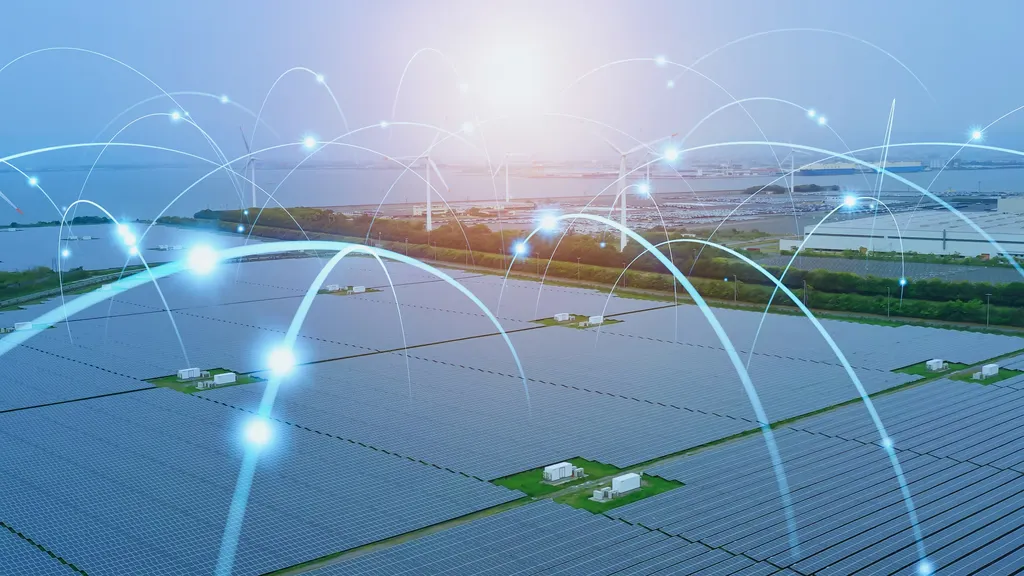
Photo Credit: metamorworks, iStock
Europe’s energy transition is entering a more complex phase. After years of prioritizing renewable generation, policymakers are now confronting a structural reality: without modern, cross-border networks, clean energy cannot move efficiently, scale reliably, or deliver its full economic impact.
That shift became explicit when the European Commission announced €650 million in new funding for electricity and hydrogen infrastructure, a move outlined in Euronews’ coverage of the EU’s investment in cross-border hydrogen and electricity infrastructure. Rather than focusing solely on generation, the funding targets the connective tissue of the energy system, including smart grids, interconnectors, storage, and hydrogen terminals across Spain, the Baltics, Germany, the Netherlands, and southeastern Europe.
The signal is unmistakable: the next decade of energy investment will be defined less by how much clean power is produced and more by how effectively it is moved, balanced, and integrated.
Why the grid has become the bottleneck
Europe is producing more renewable electricity than ever, yet much of it is being constrained by infrastructure that was never designed for variable, distributed generation. Grid congestion, curtailment, and long connection queues are increasingly common as wind and solar capacity outpaces transmission upgrades.
This imbalance was highlighted by the Financial Times, which recently reported that Europe’s renewables expansion is being slowed by delays in grid connections and transmission capacity. In practical terms, this means clean energy is often generated where it cannot be used, turning a climate solution into an operational and economic inefficiency.
This dynamic echoes broader capital market concerns explored in Institutional capital, grid strain, and the search for climate-aligned real estate resilience, where aging infrastructure is increasingly seen as both a risk factor and a major investment opportunity.
Cross-border networks as energy security strategy
The geography of the EU’s funding reveals a deeper strategic intent. Spain, the Baltics, and southeastern Europe are receiving significant support not just to decarbonize, but to interconnect, reducing reliance on external energy sources and strengthening regional resilience.
This approach mirrors developments in offshore wind, where Reuters reports that European countries are coordinating offshore wind infrastructure to hedge against dependence on imported gas. In both cases, energy infrastructure is being treated as shared, strategic capacity rather than isolated national assets.
As grids become more interconnected, they also become more digital. Sensors, software, and real-time controls are now essential for balancing supply and demand, reinforcing the shift described in Infrastructure is entering its climate-resilient, data-driven era.
Hydrogen infrastructure adds a new network layer
Electricity is only part of the story. Hydrogen is emerging as a parallel infrastructure challenge, one that requires storage caverns, import terminals, and conversion facilities to function at scale.
Germany’s hydrogen storage projects and terminals in Wilhelmshaven, alongside Rotterdam’s ammonia-to-hydrogen facilities, are part of a funding wave detailed in Hydrogen Insight’s reporting on EU support for cross-border hydrogen infrastructure. These projects are foundational for industrial decarbonization, but only work if they are fully integrated into Europe’s broader energy network.
Hydrogen, like electricity, becomes valuable only when it can move seamlessly across borders, industries, and markets.
What this means for cities, capital, and infrastructure leaders
For investors, grid modernization represents a shift toward long-duration, policy-supported assets with increasing relevance to climate adaptation, data systems, and urban resilience. For cities, stronger networks mean more reliable power, lower energy volatility, and greater capacity to electrify transport, buildings, and industry.
These systems also intersect with the rise of AI and digital infrastructure, a convergence explored in What Davos revealed about AI, infrastructure, and cities, where energy, data, and urban systems are increasingly inseparable.
Europe’s energy transition is no longer constrained by ambition or generation capacity. It is constrained by networks.
By prioritizing grids, interconnectors, and hydrogen infrastructure, the EU is addressing the missing middle of the transition, the systems that transform clean energy from potential into performance. The great grid buildout is not just an infrastructure story, it is the foundation for Europe’s economic competitiveness, energy security, and climate future.