From Hype to Housing: How 3D Printing Is Finding Its Place in Real Estate

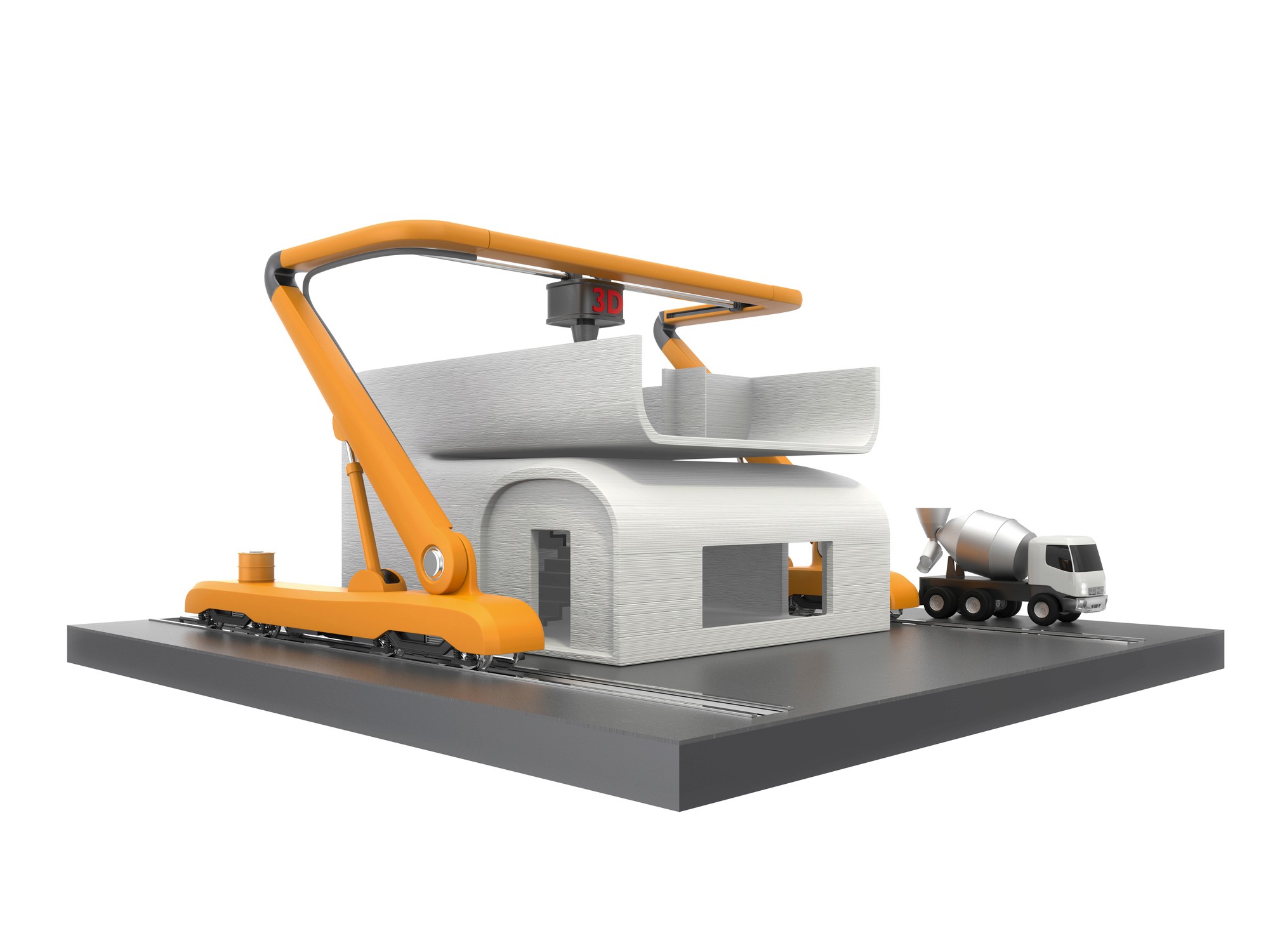
Photo Credit: Chesky_W, iStock
For years, construction and real estate technology chased spectacle. Faster builds. Autonomous sites. Entire neighborhoods promised at the push of a button. And for a while, the narrative worked.
But something has shifted.
In 2026, the strongest signal around 3D printing in real estate is not a futuristic render or a viral demo. It is where projects are actually breaking ground, how communities are embedding fabrication locally, and which problems additive manufacturing is finally being trusted to solve.
3D printing is no longer trying to reinvent housing overnight. It is being asked to make the built environment more durable, more affordable, and more workable.
That change in expectations matters.
Because when a technology stops performing for attention and starts performing for infrastructure, it enters a very different phase of adoption.
When Innovation Moves From Demos to Delivery, Pay Attention
The clearest signal did not come from startups chasing headlines. It came from practitioners insisting on proof.
A recent analysis from Housing Digital makes this point explicitly. In
In a World of Hype, It’s Vital to Stay Grounded, the focus is not on breakthrough claims, but on whether emerging technologies can survive real world constraints such as regulation, certification, workforce readiness, and long term maintenance.
Nowhere is this more visible than in construction automation and 3D printing.
At the Housing Innovation Show, speakers highlighted projects like Ireland’s Grange Close, the world’s first 3D printed social housing development to achieve ISO certification, delivered 35 percent faster and at lower cost and carbon than traditional builds. Not because it was radical, but because it was integrated. Robotics, BIM, materials science, and compliance all moved together.
This is not disruption theater. It is execution.
And it reflects a broader shift we have examined before, where infrastructure focused sectors begin to reject novelty in favor of systems that actually hold up under pressure, a pattern that mirrors how institutional capital behaves when stability and resilience start to matter more than upside alone, as explored in our analysis of institutional capital, grid strain, and the search for climate aligned real estate resilience.
3D Printing Is Becoming Local Infrastructure
If large scale housing projects show how 3D printing can work at scale, regional initiatives reveal something just as important: where the technology is landing.
In South Boston, Virginia, a former fire company support center is being transformed into The Hub @ 801, an expanded innovation and fabrication campus anchored by a new Fab Lab. As reported in
Building Transformation Begins in South Boston, the facility will offer 3D printing, CNC machining, and digital fabrication tools to serve workforce development, entrepreneurs, and applied learning.
This is not a speculative real estate play. It is adaptive reuse tied directly to economic participation.
Fab Labs are increasingly treated as civic infrastructure, embedded within communities rather than isolated in industrial parks or research campuses. They support local repair, prototyping, training, and small scale production. Over time, they reduce dependence on long supply chains and external vendors.
For real estate, this matters.
Buildings are no longer just endpoints for finished materials. They are becoming nodes within local fabrication ecosystems. That shift changes how developers think about space, zoning, partnerships, and long term asset value.
It also reinforces a broader trend we see across smart buildings and climate aligned development, where physical assets increasingly serve multiple economic and infrastructural roles, echoing themes from our breakdown of decarbonization in real estate and how buildings become climate assets.
The Quiet Layer Making 3D Printing Useful
Behind every successful 3D printed component or structure sits an unglamorous but essential capability: digital capture.
As detailed in
Turning Physical Parts into Printable 3D Models Through Digital Capture, one of the biggest barriers to real world adoption is not printing itself, but the lack of accurate digital models for existing assets. Aging buildings, discontinued components, and hand modified systems often have no usable documentation.
Scanning changes that.
By converting physical objects into editable digital models, digital capture allows operators to repair, reproduce, and adapt components without starting from scratch. In real estate and facilities management, this means faster maintenance cycles, lower replacement costs, and less downtime for critical systems.
This is where 3D printing stops being experimental and starts becoming operational.
Instead of replacing entire systems, additive manufacturing supports incremental improvement. Parts are scanned, refined, printed, tested, and reintroduced. Over time, buildings become more adaptable rather than more fragile.
That approach aligns closely with how PropTech is evolving more broadly, shifting away from wholesale disruption toward layered improvements that reduce friction and extend asset life, a theme we explored in our analysis of automation, AI governance, and the new multifamily operating model for 2026.
A New Construction Stack Is Taking Shape
Taken together, these signals point to a new stack forming around 3D printing in real estate.
At the top, certification and compliance define what is viable. In the middle, robotics and BIM integration enable repeatability. At the base, digital capture and local fabrication provide flexibility and resilience.
This is not about printing entire cities. It is about making construction and building operations less brittle.
Local Fab Labs support workforce development and repair. Scanning tools digitize legacy assets. Additive manufacturing fills gaps where traditional supply chains are slow or expensive. Developers and housing providers gain options rather than dependencies.
The result is not radical transformation overnight. It is steady system hardening.
And that is exactly the kind of innovation real estate tends to adopt.
What Grounded 3D Printing Means for Real Estate in 2026
The next phase of 3D printing in real estate will be defined by restraint, not ambition.
Successful projects will focus on certification, integration, and economics. Communities will prioritize tools that build skills locally rather than exporting value elsewhere. Operators will use printing to extend asset life rather than chase novelty.
Most importantly, 3D printing will be judged by whether it makes housing easier to deliver, maintain, and afford.
The industry is no longer asking what additive manufacturing could do in theory. It is asking what it can be trusted to do in practice.
That is a harder test. But it is also how technologies become infrastructure.
And once that happens, they tend to stick.